Omron BP786 Manual: A Comprehensive Guide
This manual provides detailed instructions for the Omron BP786 blood pressure monitor, covering setup, measurement techniques, feature explanations, and troubleshooting steps for optimal use.
The Omron BP786 is an advanced, clinically validated blood pressure monitor designed for convenient and accurate home health monitoring. This device empowers individuals to proactively manage their cardiovascular health by providing reliable blood pressure readings and insightful data analysis. It’s more than just a monitor; it’s a tool for understanding your body and making informed lifestyle choices.
Featuring a user-friendly interface and advanced technologies like Bluetooth connectivity for data syncing, the BP786 simplifies tracking your blood pressure trends over time. Its compact design and ease of use make it suitable for users of all ages and technical abilities. This manual will guide you through every aspect of the BP786, from initial setup to interpreting your results, ensuring you maximize its benefits for a healthier life.
Unboxing and Component Overview
Upon opening your Omron BP786 package, carefully verify that all components are present. You should find the BP786 monitor unit itself, a compatible blood pressure cuff (size may vary – see section on cuff selection), and this comprehensive instruction manual. Depending on the model, you may also receive batteries, an AC adapter for alternative power, and potentially a quick start guide for immediate use.
Inspect each component for any signs of damage during shipping. The cuff should be free of tears or punctures, and the monitor unit should have no visible cracks or defects. Familiarize yourself with the monitor’s buttons and display screen. Understanding the layout of these components before setup will streamline the initial configuration process and ensure a smooth user experience. Retain the packaging for potential future transport or warranty claims.

Setting Up Your BP786
Proper setup is crucial for accurate readings. This section details installing power, correctly attaching the cuff, and selecting the appropriate cuff size for reliable measurements.
Installing Batteries or AC Adapter
The Omron BP786 offers flexible power options: you can use either four AA alkaline batteries or the included AC adapter. To install batteries, locate the battery compartment, typically on the underside of the unit. Ensure correct polarity (+ and -) when inserting the batteries.
For AC adapter use, connect the adapter to the DC IN jack on the side or back of the monitor. Then, plug the adapter into a standard wall outlet. The device will automatically prioritize AC power when connected, disabling battery usage.
Important considerations: Remove batteries if the monitor will not be used for an extended period to prevent leakage. Only use recommended alkaline batteries; avoid rechargeable or heavy-duty types; Always disconnect the AC adapter before cleaning the device. Confirm the adapter voltage matches your local power supply.
Attaching the Cuff Correctly
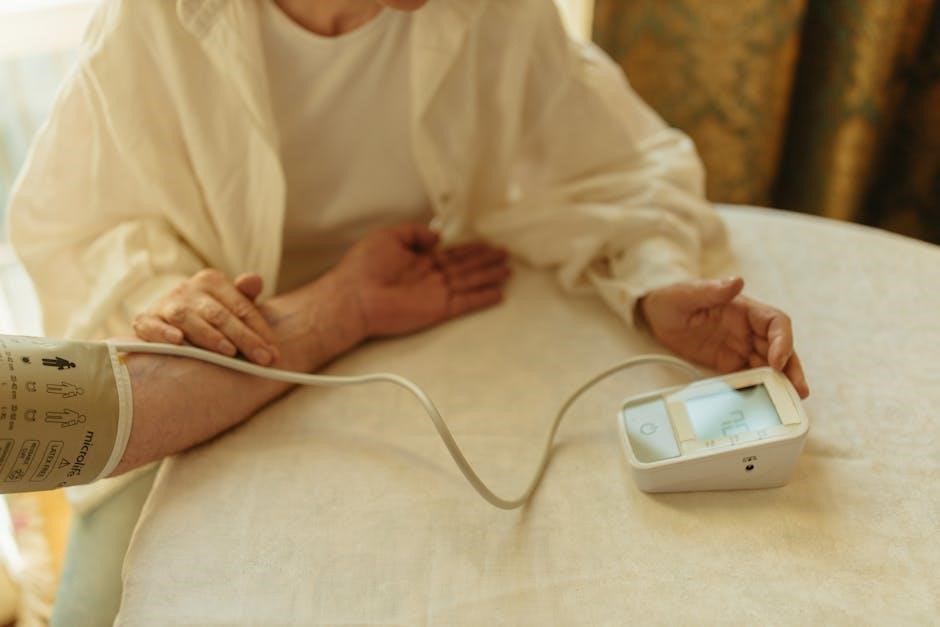
Proper cuff attachment is crucial for accurate readings. Gently slide the fabric cuff over your upper arm, positioning the artery mark (usually an arrow) over the brachial artery – located on the inner side of your elbow. Ensure the cuff is snug but not too tight, allowing space for one fingertip to slide underneath the edge.
The cuff tube should align with the monitor’s connection port. Avoid placing the cuff over clothing, as this can distort measurements. The lower edge of the cuff should be approximately one inch (2-3 cm) above your elbow.
Secure the cuff firmly with the hook and loop fastener, ensuring it doesn’t slip during inflation. Incorrect cuff placement can lead to inaccurate results, so double-check before initiating a measurement. A properly fitted cuff is essential for reliable blood pressure monitoring.
Selecting the Correct Cuff Size
Choosing the right cuff size is paramount for accurate blood pressure measurements with your Omron BP786. Using an incorrectly sized cuff can significantly skew results, leading to misdiagnosis or ineffective treatment. Measure your upper arm circumference to determine the appropriate size.
Generally, a small/medium cuff (22-32 cm) fits arm circumferences within that range, while a large cuff (32-42 cm) is suitable for larger arms. Omron often provides markings on the cuff itself indicating the applicable circumference.
If your measurement falls between sizes, it’s generally recommended to choose the larger cuff for improved accuracy. An ill-fitting cuff – too loose or too tight – compromises the reading. Always refer to the detailed sizing chart in this manual for precise guidance.
Taking Accurate Blood Pressure Measurements
Ensure proper technique and positioning for reliable readings with the Omron BP786, minimizing external factors that could influence results and ensuring data validity.
Proper Positioning During Measurement
Achieving accurate blood pressure readings with your Omron BP786 hinges on correct positioning. Sit comfortably with your back supported and feet flat on the floor – avoid crossing your legs. Rest your arm on a flat surface, ensuring the cuff is at heart level.
Avoid talking or moving during the measurement process, as this can artificially elevate your blood pressure. Take measurements in a quiet environment, free from distractions. It’s best to avoid caffeine, alcohol, and smoking for at least 30 minutes before taking a reading.
Ensure your arm is relaxed and not tense. Proper positioning minimizes interference and provides the most consistent and reliable blood pressure data. Consistent positioning across measurements is crucial for tracking changes effectively.
Understanding the Measurement Process
The Omron BP786 utilizes an oscillometric method to determine blood pressure. The cuff inflates, temporarily stopping blood flow in your artery. As the cuff deflates, the device detects the pressure waves created by your pulse.
These oscillations are analyzed to calculate your systolic (highest pressure during a heartbeat) and diastolic (lowest pressure between heartbeats) blood pressure. The integrated algorithm filters out noise and provides a stable reading.
The BP786 displays your systolic and diastolic values, along with your pulse rate. The measurement typically takes less than a minute. Understanding this process helps appreciate the importance of remaining still during inflation and deflation for accurate results.
Interpreting the Results: Systolic and Diastolic Pressure
Understanding your systolic and diastolic readings is crucial for monitoring your cardiovascular health. Systolic pressure, the top number, reflects the force when your heart beats. Diastolic, the bottom number, indicates pressure when your heart rests between beats.
Generally, normal blood pressure is considered below 120/80 mmHg. Elevated readings (120-129 systolic and below 80 diastolic) suggest potential risk. Stage 1 hypertension is 130-139 systolic or 80-89 diastolic, while Stage 2 is 140/90 or higher.
Consistent high readings warrant medical attention. The Omron BP786 doesn’t diagnose, but provides data for your doctor. Regularly tracking your measurements helps identify trends and manage your health effectively. Consult a healthcare professional for personalized interpretation.

Advanced Features of the BP786
The BP786 boasts memory storage, average value calculations, and irregular heartbeat detection, providing comprehensive data and insights for better health management and monitoring.
Memory Function and Data Storage
The Omron BP786 is equipped with a robust memory function, allowing users to store multiple blood pressure readings for tracking trends over time. This feature is invaluable for individuals managing hypertension or other cardiovascular conditions, as it provides a historical record for review with healthcare professionals.
Typically, the BP786 can store readings for one or two users, each with a substantial memory capacity – often exceeding 100 readings. Stored data usually includes the systolic and diastolic blood pressure values, pulse rate, date, and time of measurement.
Accessing stored data is straightforward, utilizing the device’s buttons to scroll through previous readings. Some models may also offer the ability to view average readings calculated over a specified period, further simplifying data analysis. The ability to consistently monitor and record blood pressure empowers users to proactively manage their health and collaborate effectively with their doctors.
Average Value Calculation
The Omron BP786 simplifies blood pressure monitoring by automatically calculating average readings, providing a clearer picture of your cardiovascular health trends. Instead of manually averaging multiple measurements, the device does the work for you, saving time and reducing potential errors.
This feature typically allows users to calculate averages over morning, evening, or the entire day. The BP786 usually stores the last 7 or 30 days of readings, enabling comprehensive trend analysis. Accessing these averages is usually done through the device’s menu, navigated using the operation buttons.
Average values are particularly useful for identifying patterns and assessing the effectiveness of lifestyle changes or medication. Regularly reviewing these calculated averages, alongside individual readings, offers a more holistic understanding of your blood pressure control and facilitates informed discussions with your healthcare provider.
Irregular Heartbeat Detection
The Omron BP786 incorporates an Irregular Heartbeat (IHB) detection feature, designed to alert users to potentially abnormal heart rhythms during blood pressure measurement; This function analyzes the pulse rate and identifies deviations from a regular pattern. It’s crucial to understand that this feature does not diagnose arrhythmias; it simply indicates a possible irregularity requiring medical attention.
When an irregular heartbeat is detected, the BP786 will display an IHB symbol alongside the blood pressure reading. It’s important not to panic, but to record the occurrence and consult with a healthcare professional. Repeated detection of IHB warrants a medical evaluation to determine the underlying cause.
This feature provides an extra layer of health monitoring, empowering users to proactively address potential cardiovascular concerns. However, it should not replace regular check-ups and professional medical advice. Always discuss any IHB detections with your doctor for proper diagnosis and treatment.
Troubleshooting Common Issues
This section addresses frequent problems with the Omron BP786, including error codes, cuff inflation difficulties, and connectivity concerns, offering solutions for smooth operation.
Error Codes and Their Meanings
The Omron BP786 utilizes error codes to signal potential issues during operation. Understanding these codes is crucial for effective troubleshooting. An “Err1” message typically indicates a problem with the cuff connection or leakage, requiring reattachment or inspection. “Err2” suggests an internal system error, potentially needing service. “Err3” often points to excessive pressure within the cuff, prompting immediate discontinuation of use and a review of proper cuff application;
Furthermore, a flashing “E” symbol can signify movement during measurement, impacting accuracy; remain still during readings. If the device displays “Cuff Err,” verify the cuff is correctly sized and positioned; Regularly checking the manual’s comprehensive error code list ensures accurate diagnosis and resolution of any operational difficulties, maintaining reliable blood pressure monitoring. Ignoring these signals could lead to inaccurate results.
Cuff Inflation Problems
Experiencing issues with cuff inflation on your Omron BP786 is relatively common, often stemming from simple causes. A frequently encountered problem is a loose or improperly connected cuff tube; ensure a secure connection at both the cuff and the monitor. Check for kinks or obstructions within the tubing itself, as these can restrict airflow. If the cuff isn’t inflating fully, verify you’ve selected the correct cuff size for your arm circumference – an incorrect size hinders proper inflation.
Additionally, ensure the cuff is wrapped snugly, but not too tightly, around your upper arm. A damaged cuff can also cause inflation failures; inspect for cracks or leaks. If problems persist, try replacing the cuff or contacting Omron support for assistance. Consistent inflation issues warrant professional evaluation.
Connectivity Issues (if applicable)
If your Omron BP786 model features Bluetooth connectivity for data transfer to a smartphone or computer, occasional synchronization problems may arise. First, confirm Bluetooth is enabled on both your BP786 and your receiving device. Ensure the Omron Connect app (or compatible software) is updated to the latest version, as updates often address connectivity bugs. Check that your device is within the Bluetooth range of the monitor – typically around 30 feet.
Sometimes, simply restarting both the BP786 and your smartphone/computer can resolve pairing issues. If problems persist, try “forgetting” the BP786 in your device’s Bluetooth settings and then re-pairing it. Consult the Omron Connect app’s help section or Omron’s support website for detailed troubleshooting steps.

Maintaining Your Omron BP786
Regular cleaning, proper battery handling, and periodic accuracy checks are crucial for ensuring the longevity and reliable performance of your Omron BP786 monitor.
Cleaning and Storage Instructions
To maintain the accuracy and hygiene of your Omron BP786, regular cleaning is essential. Always disconnect the AC adapter and remove the batteries before cleaning. Gently wipe the main unit and cuff with a soft, dry cloth. Avoid using abrasive cleaners, solvents, or excessive moisture, as these can damage the device.
For stubborn stains, lightly dampen the cloth with water and mild detergent, then wipe and dry thoroughly. Never immerse the main unit in water. The cuff can be hand-washed with mild soap and water, ensuring it is completely dry before reattaching.
When storing the BP786, keep it in a cool, dry place away from direct sunlight and extreme temperatures. Avoid storing it with corrosive materials. Proper storage will help prolong the life of your device and ensure accurate readings for years to come. Protect the cuff from sharp objects to prevent damage.

Battery Replacement Guidelines
The Omron BP786 operates on AA batteries. When the low battery indicator appears on the display, it’s time for replacement. Always use new batteries of the same type and capacity to ensure optimal performance and accurate readings. Do not mix old and new batteries, or different types of batteries.
To replace the batteries, open the battery compartment located on the back of the unit. Insert the batteries according to the polarity markings (+ and -) inside the compartment. Ensure the batteries are securely in place. If the unit will not be used for an extended period, it is recommended to remove the batteries to prevent potential leakage and corrosion.
Dispose of used batteries properly according to local regulations. Do not incinerate. Regularly check the battery compartment for any signs of corrosion and clean if necessary. Using quality batteries will maximize the lifespan of your BP786.
Calibration and Accuracy Checks
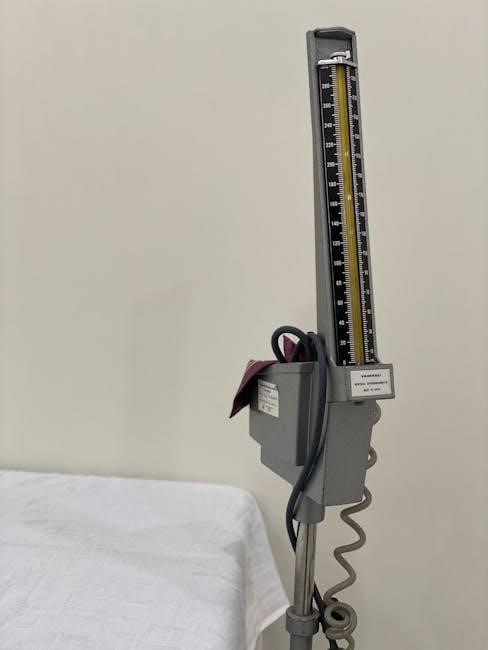
The Omron BP786 is factory calibrated and generally does not require routine recalibration. However, to ensure continued accuracy, periodic checks are recommended. Compare your BP786 readings with those taken by a healthcare professional using a calibrated mercury sphygmomanometer.
If significant discrepancies are observed, contact Omron customer support for assistance. Do not attempt to self-calibrate the device. Proper cuff size and correct measurement technique are crucial for accurate readings; ensure these are followed consistently. Environmental factors, such as temperature, can also influence readings.
Regularly inspect the cuff and tubing for any signs of damage or wear, as this can affect accuracy. Maintaining the device according to the cleaning guidelines also contributes to reliable performance. Consistent monitoring and comparison are key to verifying accuracy.